VERBS FOLLOWED BY GERUND AND/OR INFINITIVE


I HOPE THESE LINKS HELP YOU TO UNDERSTAND AND LEARN ABOUT THE USE OF THE GERUND AND INFINITIVE.


Read Users' Comments (0)

PREPOSITIONAL VERBS AND PHRASAL VERBS, DIFFERENCES


Prepositional Verbs
First explain the English prepositional verb. Prepositional verbs are defined as intransitive verbs that consist of a verb followed by a prepositional phrase. The prepositional phrase functions as a verb phrase complement. A verb phrase complement is defined as a word or phrase that directly follows and completes the meaning of the verb. The following English verbs are prepositional verbs:
  • approve of
  • ask for
  • cope with
  • insist on
  • laugh about
  • listen to
For example:
  • Her parents approve of her boyfriend.
  • The patient is asking for pain medication.
  • He has been coping with his increased workload.
  • The doctor insisted on several tests.
  • We can now laugh about the accident.
  • The neighbors listen to terrible music.
Prepositional verbs are intransitive meaning prepositional verbs do not and cannot take direct objects. 

Phrasal Verbs  
Next explain the English phrasal verb. Phrasal verbs are defined as periphrastic intransitive or transitive verbs that consist of a verb followed by one or more prepositions. The preposition functions as a particle. A particle is defined as a function word that performs a grammatical function but has little lexical meaning. The following English verbs are phrasal verbs:
  • act up (misbehave)
  • butt in (interrupt)
  • drop in on (visit)
  • get in (arrive)
  • mix up (confuse)
  • take after (resemble)
For example:
  • My students have been acting up lately.
  • His coworker always butts in on his private conversations.
  • We dropped in on our grandparents yesterday.
  • What time does the train get in?
  • I always mix their names up!
  • She takes after her father.
Phrasal verbs may be either intransitive or transitive depending on the specific verb. Intransitive phrasal verbs cannot or do not take direct objects. Transitive phrasal verbs must take direct objects. For example:
  • The baby just woke up. (intransitive)
  • My little brother ran away from home. (intransitive)
  • Two toddlers threw up today. (intransitive)
  • The construction crew blew up the old building. (transitive)
  • The courts have done away with corporeal punishment. (transitive)
  • He will pay off his debt. (transitive)
The preposition functioning as the particle may or may not directly follow the verb. Nonseparable phrasal verbs require the preposition to directly follow the verb. Optionally separable phrasal verbs allow the preposition to follow either the verb or the direct object. Obligatorily separable phrasal verbs require the preposition to directly follow the direct object. Only transitive phrasal verbs can be optionally or obligatorily separable. For example:
  • The entertainment finally showed up. (nonseparable)
  • The boss just laid in on our lazy coworker. (nonseparable)
  • The ushers pass out the programs. (optionally separable)
  • The ushers pass the programs out. (optionally separable)
  • The child looked up the information. (optionally separable)
  • The child looked the information up. (optionally separable)
  • The child looked it up. (obligatorily separable)
The meaning of a phrasal verb is figurative. For example, the meaning of the phrasal verb throw up "vomit" cannot be determined by combining the meanings of throw "toss" and up "at a higher point." Phrasal verbs often have single-word synonyms as in throw up and vomit.

To determine whether a verb is prepositional or phrasal, your ESL students must look at the transitivity of the verb, the function of the preposition, and separability of the preposition.
  1. First consider the transitivity of the verb. If the verb is transitive, then the verb-preposition combination is definitely a phrasal verb.
  2. If the verb is intransitive, then consider the separability of the preposition. If the preposition is separable, then the verb-preposition combination is definitely a phrasal verb.
  3. If the preposition is nonseparable, finally consider the function of the preposition. If the preposition functions as a particle, then the verb-preposition combination is definitely a phrasal verb.
  4. If the verb is intransitive, the preposition nonseparable, and the preposition functions as a verb phrase complement, then the verb-preposition combination is definitely a prepositional verb.

Taken FROM

Read Users' Comments (0)

CUADERNILLO DE REPASO PARA 2nd BACH


FURTHER REVISION

Read Users' Comments (0)

BOOKS 3rd TERM

HERE YOU HAVE TWO OPTIONS TO CHOOSE FOR THIS 3rd TERM. 


A.

Ghost Stories (5 stories)

STAGE 5 - Fantasy & Horror

After dinner we turned the lights out and played 'hide-and-seek'. In the dark, I touched a hand, a very cold hand. Now, because of the game, I had to hide in the dark with . . . with this cold person - not speaking, not knowing who it was. Slowly the others found us, hid with us, until we were all there - all thirteen. Thirteen? But there were only twelve people in the house!


B.

A FOREIGNER IN NEW YORK
RAMÓN YBARRA RUBIO
Genre: Fiction

Words: 1,700-2,220 Headwords
In this sequel to our successful Bachillerato 1 reader, A Foreigner in Britain, we follow Antonio on his travels around New York. Antonio’s impressions of the city are conveyed through a series of visits to major landmarks and meetings with fascinating people. This entertaining reader will give your students a delightful introduction to this world-famous city, its history and way of life.


Read Users' Comments (0)

REPORTED SPEECH

Read Users' Comments (0)

INTERNATIONAL WOMEN'S DAY

Read Users' Comments (0)

WHAT IS A FREEGAN?


Freegans are people who employ alternative strategies for living based on limited participation in the conventional economy and minimal consumption of resources. Freegans embrace community, generosity, social concern, freedom, cooperation, and sharing in opposition to a society based on materialism, moral apathy, competition, conformity, and greed.
READ MORE

Read Users' Comments (0)

I WISH / IF ONLY....


I WISH / IF ONLY
There are four types of I wish / If only sentences.
1. A regret that a present, future or general situation is not what you would like it to be:
I wish / If only + S + Past
  • I wish I were rich. (I am not)
  • I wish it didn’t rain tomorrow.
2. A regret that sth happened or didn’t happen in the past.
I wish / If only + S + Past Perfect
  • I wish I had already started studying for the exam. (I have not)
  • I wish I had been able to go to the concert.
3. A desire for someone or something to change or to do or stop doing something.
This type of I wish sentence expresses some kind of ANNOYANCE.
I wish + S + WOULD + V
  • I wish you wouldn’t smoke so much.
  • I wish the children would be quiet.
NOTE: You CANNOT use WOULD when the subject of the subordinate clause is the same as the subject of the main clause.
4. A wish that sb was able to do sth which they can’t do.
I wish + S + COULD + V
  • I wish I could give up smoking.
  • I wish I could play the piano.

Read Users' Comments (0)

HOW TO WRITE A DISCUSSION ESSAY

7.2 Discussion Essay Esl Printables

Read Users' Comments (0)

EDUCATION VOCABULARY


Read Users' Comments (0)

Cranberry mince pies

RECIPE:

Cranberry mince pies

cranberris (arándanos)


CHRISTMAS PUDDING
The dessert of a British Christmas Dinner may often be Christmas pudding, which dates from medieval England. Trifle, mince pies, Christmas Cake or a Yule Log are also popular.

Read Users' Comments (0)

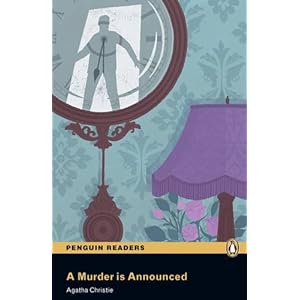
2nd TERM READERS


Key Features
  • 104 pages
  • 27,262 words in length (excluding activities)
  • 2,300 headwords
  • Penguin contemporary story
  • Activities at the end of the book

Description
When a notice appears in the local newspaper, the villagers are curious. Is it a joke, or is there really going to be a murder at Little Paddocks? At the announced time, the lights go out. Gunshots are heard. What is happening? Will Miss Marple be able to explain the mystery?
Listen to a sample audio.


Key Features

  • Genre: Humour
  • Level: Medium
  • Words: 1,700-2,200 Headwords


Description
In this sequel to The Secret Diary of Adrian Mole, Adrian continues the hilarious account of his attempts to come to terms with the break-up of his parents’ marriage and their reconciliation, the birth of his baby sister, his own budding sexuality and his friendship with the school bully and his gang.


REMEMBER YOU  HAVE TO CHOOSE ONE OF THEM.

Read Users' Comments (0)

FREERUNNING


FREERUNNING OR PARKOUR


Have a look at these exercises and review the vocabulary related to this specific sport.

Read Users' Comments (0)

LISTENING.

A Healthy Lifestyle


listening on diet and exercise

Read Users' Comments (0)

MODAL VERBS EXERCISES


Modal verbs Deduction and probability 

Read Users' Comments (0)

MODAL VERBS

 Modal Verbs Chart

Read Users' Comments (0)

SPORTS PLAYED IN BRITAIN

Sports play an important part in the life in Britain and is a popular leisure activity.

SPORTS IN BRITAIN

Read Users' Comments (0)

RELATIVE CLAUSES

Read Users' Comments (0)

TUMBLING!!!


 Is TUMBLING an extreme sport? CLICK AND CHECK
LISTEN TO ENGLISH

Read Users' Comments (0)